I. Four Major Difficulties in Current Pu'er Agricultural Product Circulation
- Scattered production areas: Tea, fruit, and vegetable planting areas are mostly distributed in township mountainous areas. It is difficult to uniformly collect scattered cargo sources, and the transportation cost for individual farmers to ship separately is high;
- Insufficient loss control: Traditional scattered freight lacks layered buffer packaging, making fresh produce and fresh tea prone to compression and moisture issues during long-distance transit;
- Fragmented routes: Most small-scale freight only covers a single township. Round trips to Kunming and inter-township deliveries require multiple transfers, extending the transportation cycle;
- Opaque information: Individual truck dispatching lacks a unified ledger, making it difficult for cargo owners to grasp the logistics distribution progress in real-time, and the response to abnormal handling is lagging.
II. Advantages of Dedicated Line Outlet Model Adapting to Agricultural Product Transportation
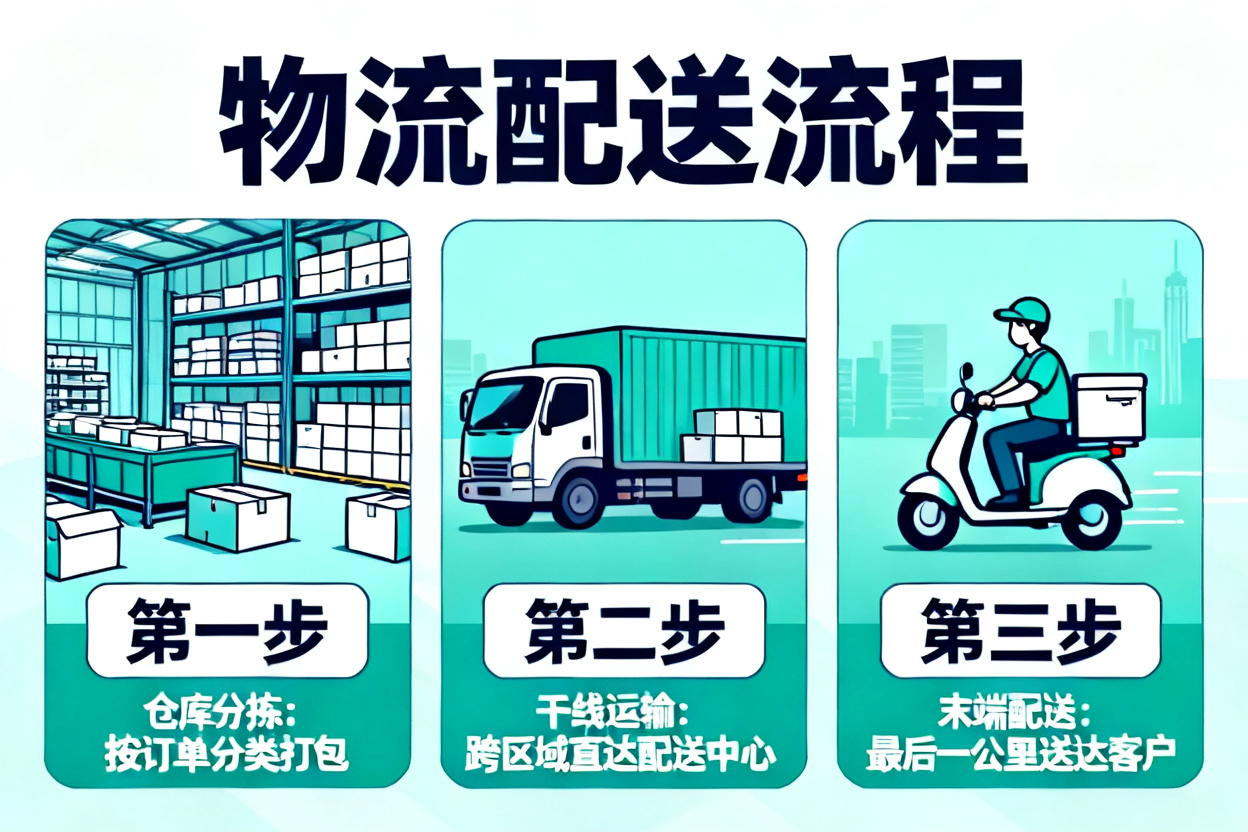
Taking the multi-level station network built by Pu'er Nandun Logistics as an example, forming a "Kunming General Transit — Pu'er Hub — Ning'er / Dadugang Township Terminal" link to match the staged transportation needs of agricultural specialty products:
- Township collection: Ning'er and Dadugang stations receive goods from farmers and cooperatives nearby, sort and pack them uniformly, reducing short-distance scattered transportation;
- Direct trunk line: Daily fixed trunk line shuttles between Kunming and Pu'er are opened, reducing intermediate transfer links and shortening overall delivery time;
- Category-based storage: The site divides independent stacking areas for tea, fresh produce, and dried goods, controlling temperature and humidity to reduce moisture loss of goods;
- Information synchronization: Relying on the Yunnan Logistics Network online platform to synchronize order tracks, cargo owners can query the real-time status of logistics distribution.
III. Distribution Supporting Schemes for Different Agricultural Products
- Pu'er tea cakes / dried tea: Use moisture-proof film packaging, set up partitions in trunk line vehicles to avoid heavy pressure, suitable for medium and long-term batch transport via Pu'er logistics dedicated lines;
- Seasonal fruits and vegetables, fresh mushrooms: Short-distance township distribution prioritizes small vans, controlling single-load capacity to reduce compression;
- Dried crops: Can be stored in transit warehouses for a long time and shipped to Kunming in batches as needed for transit and distribution outside the province.
IV. Industrial Supporting Development Direction
The export scale of Pu'er agricultural specialty products will continue to increase with the expansion of e-commerce channels. Local logistics entities with multi-level stations and fixed trunk lines are adapted to the long-term needs of the market. When cargo owners choose
logistics distribution
partners, they can prioritize service providers with local physical stations and fixed round-trip trunk lines, coordinating the whole process of collection, transportation, and transit to reduce comprehensive circulation costs. Pu'er Nandun Logistics has been rooted locally for many years, relying on the location of the Sinan Logistics City hub, covering multiple township terminal outlets, and adapting to the normalized transportation needs of various agricultural specialty products.
