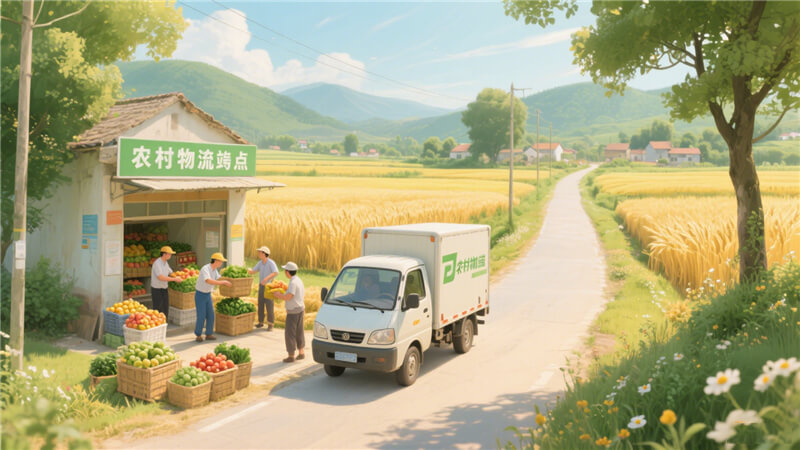
As an important infrastructure for rural economic development, rural logistics plays a significant role in promoting the implementation of the rural revitalization strategy. It can not only facilitate the circulation of agricultural products and increase farmers' income but also drive the upgrading of rural consumption and narrow the urban-rural gap.
For a long time, rural logistics has faced problems such as weak infrastructure, high logistics costs, and low delivery efficiency. Poor road conditions, inconvenient transportation, and low coverage of logistics outlets in rural areas have made it difficult for agricultural products to enter the market smoothly, and farmers also face many inconveniences when purchasing daily necessities. In addition, rural logistics demand is scattered and small in scale, making it difficult for logistics enterprises to achieve large-scale operations, which increases logistics costs and reduces the enthusiasm of logistics enterprises.
In recent years, with the increasing importance attached to and support for rural logistics by the state, rural logistics has developed rapidly. On one hand, the government has increased investment in rural transportation infrastructure, improving rural road conditions and providing convenience for logistics transportation. On the other hand, through policy guidance and financial support, logistics enterprises are encouraged to set up logistics outlets in rural areas to improve the rural logistics distribution system. At the same time, e-commerce platforms have successively laid out the rural market, promoting the integrated development of rural e-commerce and logistics.
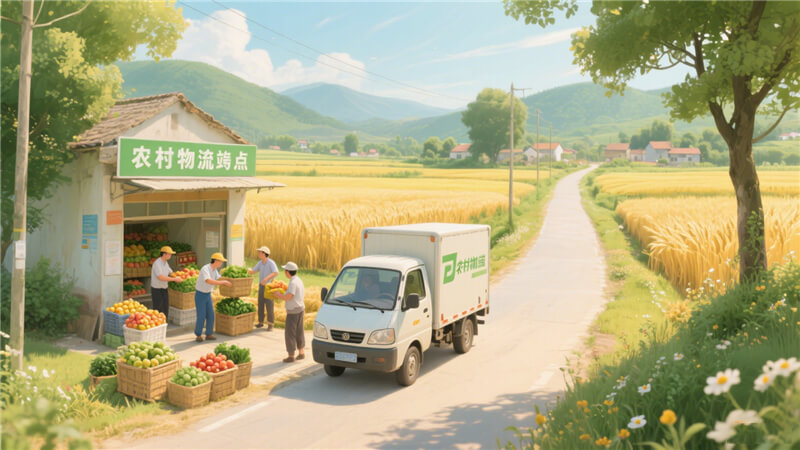
The development of rural logistics is of great significance for the sales of agricultural products and the increase of farmers' income. By establishing a cold chain logistics system for agricultural products, the problems of easy spoilage and difficult storage have been solved, extending the freshness preservation period of agricultural products and expanding their sales scope. The development of e-commerce logistics allows farmers to sell agricultural products directly to consumers through online platforms, reducing intermediate links, increasing the added value of agricultural products, and increasing farmers' income. For example, specialty agricultural products from some remote mountainous areas have entered the market through e-commerce logistics, becoming a new way for local farmers to become prosperous.
The development of rural logistics can also promote the upgrading of rural consumption. With the continuous improvement of the logistics distribution network, farmers can purchase a rich variety of goods more conveniently, meeting their needs for a high-quality life. At the same time, logistics enterprises integrate rural logistics resources by carrying out models such as joint distribution and cyclic delivery, reducing logistics costs, making rural goods more affordable, and further stimulating the potential of the rural consumer market.
However, the development of rural logistics still faces some challenges. Problems such as a shortage of rural logistics talent, a low level of informatization, and uneven logistics service quality restrict the further development of rural logistics. Therefore, it is necessary to strengthen the training of rural logistics talent, improve the level of rural logistics informatization, and establish a sound supervision system for rural logistics service quality to promote the high-quality development of rural logistics.
Rural logistics is an important support for rural revitalization. Only by continuously improving the rural logistics system and raising the level of rural logistics services can we better serve rural economic and social development and provide a strong guarantee for the implementation of the rural revitalization strategy.
