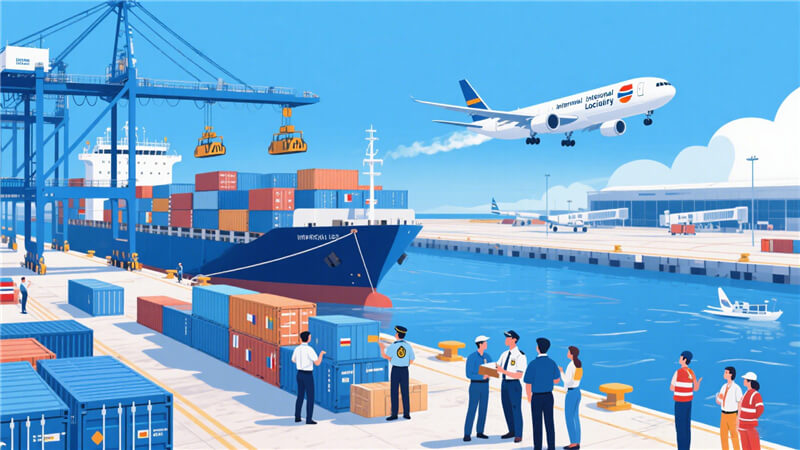
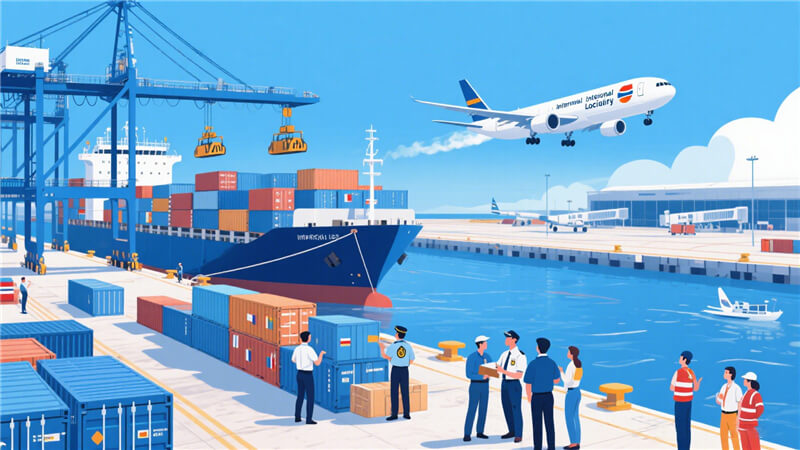
Amid the wave of economic globalization, cross-border logistics serves as a crucial support for trade, acting like a bridge connecting the world and promoting the circulation of commodities and economic cooperation among countries. It not only drives the development of trade but also provides strong support for enterprises to expand their markets.
Compared with domestic logistics, cross-border logistics possesses distinct complexity and particularity. Since it involves factors such as policies and regulations, cultural differences, and customs supervision of different countries and regions, the operation process of cross-border logistics is more cumbersome. From customs declaration and inspection to transportation and delivery, every link must strictly comply with the relevant regulations of the destination country to ensure the smooth clearance and delivery of goods. At the same time, cross-border logistics involves long distances and long transit times, and goods face more risks during transportation, such as transport delays, cargo damage, and loss, which puts forward higher requirements for the risk management capabilities of logistics enterprises.
In terms of transportation modes, cross-border logistics mainly includes sea freight, air freight, land transport, and multimodal transport. Sea freight has the advantages of large volume and low cost, making it a relatively common mode of transport in cross-border logistics, especially suitable for bulk cargo and low value-added products. Air freight is characterized by high speed and strong timeliness, suitable for transporting high-value goods with high timeliness requirements, such as electronic products and fresh food. Land transport is mainly used for cargo transportation between neighboring countries, offering strong flexibility and short transit times. Multimodal transport organically combines multiple transport modes, fully leveraging their respective advantages to improve transport efficiency and reduce transport costs.
With the rapid development of e-commerce, cross-border e-commerce logistics has become a new hotspot in the field of cross-border logistics. The transaction model of cross-border e-commerce features scattered orders, high frequency, and fast timeliness requirements, posing higher demands on logistics services. To meet the needs of cross-border e-commerce, logistics enterprises have successively launched new models such as overseas warehouses and bonded warehouses. An overseas warehouse refers to establishing a warehouse overseas and storing goods locally in advance; when an order is placed, the goods are shipped directly from the overseas warehouse, greatly shortening delivery time and improving customer satisfaction. A bonded warehouse utilizes the policy advantages of a bonded zone to store goods within the zone, with customs declaration and tax payment occurring at the time of sale, thereby reducing the capital occupation and logistics costs for enterprises.
Although cross-border logistics is developing rapidly, it also faces numerous challenges. Issues such as the rise of trade protectionism, intensified competition in the logistics market, and imperfect logistics infrastructure all restrict the development of cross-border logistics. Therefore, logistics enterprises need to continuously improve their service capabilities and competitiveness, strengthen cooperation with partners, jointly respond to challenges, and promote the healthy development of cross-border logistics.
Cross-border logistics is a bridge connecting the world and is of great significance for promoting trade and economic globalization. With continuous technological progress and the constant improvement of the market, cross-border logistics will play an even more important role in global economic development.
