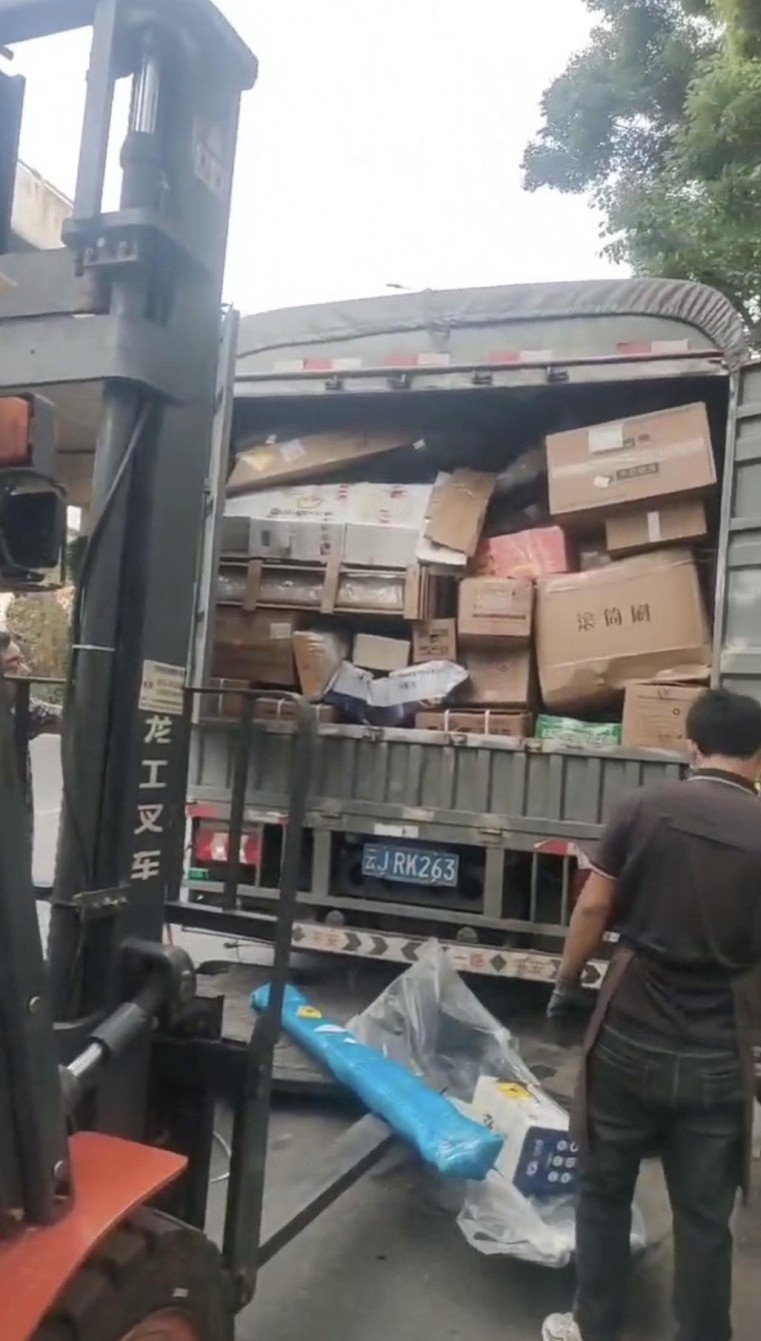
I. Industrial Drive and E-commerce Explosion, Soaring Logistics Demand
Pu'er is famous for tea and thrives because of tea. As China's largest Pu'er tea production area, the massive tea output is the fundamental driving force for logistics demand.
- Industrial Scale Expansion: In recent years, the scale of the Pu'er tea industry has grown steadily, not limited to finished tea cakes, but also including deep-processed products such as tea paste, tea powder, and tea beverages, posing higher requirements for the category adaptability of logistics transportation.
- E-commerce Livestreaming Empowerment: Livestreaming e-commerce on platforms like Douyin and Taobao has completely changed the sales model of Pu'er tea. The "direct shipping from origin" model from tea mountains to tea cups has become mainstream, generating massive, small-batch, high-frequency express orders, which directly stimulated the explosive growth of local express logistics business.
- National and Global Markets: With the popularization of Pu'er tea culture, the consumer market has rapidly expanded from the traditional Guangdong-Hong Kong-Macao and Beijing-Tianjin-Hebei regions to the whole country, and is also sold far to Southeast Asia, Europe, and North America. This tests the breadth of the logistics network and cross-border customs clearance capabilities.
II. Industry Upgrade: From "Shipping Out" to "Shipping Well"
To cope with surging demand and improve service quality, the Pu'er logistics distribution industry presents three major upgrade trends:
- Increasingly Perfect Infrastructure: In recent years, Pu'er City has vigorously promoted the construction of "smart logistics" parks, integrating warehousing, sorting, and distribution functions. Meanwhile, with the opening of the China-Laos Railway, Pu'er's locational advantage has become prominent, providing a new strategic channel for large-scale, low-cost export of tea by rail.
- Segmentation of Professional Services: Cold Chain Logistics for High-end Tea: For some high-end ancient tree teas that are extremely sensitive to temperature and humidity, professional temperature and humidity-controlled storage and cold chain transportation services have emerged to ensure the tea does not lose its flavor during transit. Integrated Supply Chain Services: Leading logistics enterprises no longer merely provide transportation, but provide tea enterprises with integrated supply chain solutions from warehousing management, customized packaging, brand marketing to terminal distribution, helping tea enterprises reduce costs and increase efficiency.
- Technology Empowering Full-process Traceability: Utilizing IoT and blockchain technology, each tea cake is given a unique "digital ID". Consumers can scan the QR code to trace the entire process of the tea from picking, processing, warehousing to logistics, greatly enhancing consumer confidence and brand value, with logistics being an indispensable part of this.
III. Challenges and Pain Points: The "Obstruction" Behind the Tea Fragrance
Despite rapid development, Pu'er logistics distribution still faces several core challenges:
- High Costs in the "Last Mile": Pu'er is located in Southwest Yunnan, with vast mountainous areas. Delivering packages from township distribution points to tea farmers scattered in mountain villages, or collecting goods from tea mountains, faces difficulties such as long routes, scattered points, and low order density, making distribution costs far higher than in plain cities.
- Shortage of Professional Talent and Awareness: The industry lacks composite talents who understand both logistics and tea characteristics. Some traditional logistics practitioners have insufficient understanding of the delicate nature of tea, which can easily cause damage to tea products during handling and stacking, triggering consumer disputes.
- Massive Seasonal Fluctuations: The spring and autumn tea picking seasons create huge logistics peaks, leading to severe capacity shortages in a short time, while in the off-season, capacity may be idle. This poses extremely high requirements for the flexible operation capabilities of logistics enterprises.
- Insufficient Branding and Service Standardization: Except for a few leading enterprises, most local logistics service providers are still stuck in the stage of homogeneous price competition, lacking Pu'er local logistics brands with national influence, and service standards vary.
IV. Future Outlook and Suggestions
Facing opportunities and challenges, if the Pu'er logistics industry wants to achieve sustainable development, it requires multi-party synergy:
- For the Government: Continue to increase investment in rural transportation infrastructure, encourage innovative models such as "passenger-freight-mail" integration, and solve rural logistics problems. At the same time, plan and construct professional tea logistics parks to guide industrial agglomeration.
- For Logistics Enterprises: Delve into niche markets, develop professional service capabilities for tea logistics, and establish industry operating standards. Meanwhile, actively embrace technology, optimize routing and manage inventory through digital tools, and enhance risk resistance.
- For Tea Enterprises and Farmers: Actively choose to cooperate with logistics partners with professional qualifications, view logistics services as part of brand building, and jointly promote the improvement of industry service standards.
Conclusion:
Pu'er's logistics distribution carries not only commodities but also the modern echo of the thousand-year-old Tea Horse Road. Driven by both the e-commerce economy and characteristic agriculture, this "modern Tea Horse Road" is becoming increasingly busy and efficient. In the future, whoever can better solve the problem of terminal distribution and provide professional quality services will seize the opportunity in this promising green industry, letting Pu'er's tea fragrance drift mellower and further to the world.
