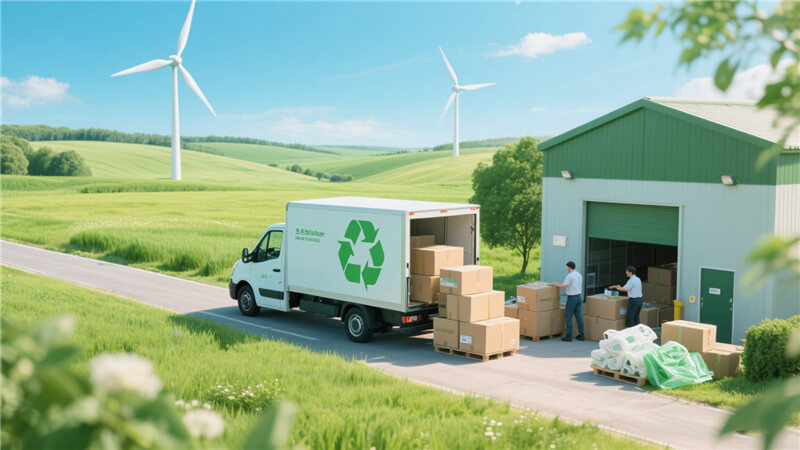
Against the backdrop of increasingly severe global environmental issues, green logistics, as a sustainable logistics model, has gradually become a focus of the logistics industry. It is not only related to the social responsibility of logistics enterprises but also the key to achieving the coordinated development of economy and environment.
Green logistics covers the entire process of logistics activities, from packaging and transportation to warehousing and distribution, with each link emphasizing environmental protection and resource conservation. In terms of packaging, traditional single-use plastic packaging has caused significant environmental pollution and resource waste. Green logistics advocates the use of degradable and recyclable eco-friendly packaging materials, such as paper packaging and biodegradable plastics. At the same time, by optimizing packaging design, reducing excessive packaging, and improving the reuse rate of packaging materials, the impact of packaging waste on the environment is reduced.
The transportation link is one of the main sources of carbon emissions in the logistics industry. Green logistics reduces energy consumption and pollutant emissions by adopting new energy vehicles, optimizing transportation routes, and increasing vehicle load rates. For example, the application of electric trucks and hydrogen fuel cell vehicles not only reduces exhaust emissions but also lowers dependence on traditional fuel. In addition, through models such as joint distribution and milk-run pickups, logistics resources are integrated, transportation efficiency is improved, and vehicle empty-run rates are reduced, thereby achieving the goals of energy conservation and emission reduction.
In the warehousing and distribution links, green logistics focuses on energy-saving design and intelligent management of warehouses. Technologies such as solar photovoltaic power generation and rainwater collection systems are adopted to reduce energy consumption and water resource waste in warehouses. At the same time, intelligent warehouse management systems are used to rationally plan cargo storage locations, improve warehouse space utilization, reduce unnecessary handling and loading/unloading, and lower energy consumption and cargo loss.
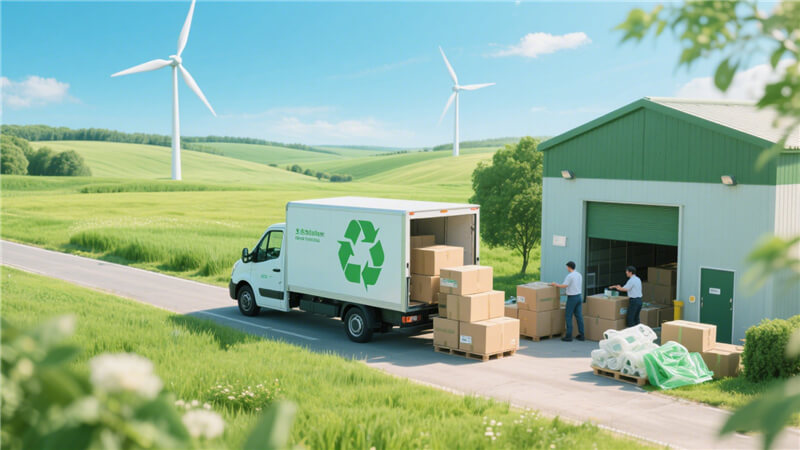
Promoting the development of green logistics requires the joint efforts of the government, enterprises, and all sectors of society. The government should formulate relevant policies and regulations to encourage and support logistics enterprises in carrying out green logistics practices, providing financial subsidies and tax incentives to enterprises that adopt eco-friendly technologies and equipment. Logistics enterprises need to enhance environmental awareness, increase investment in green logistics technologies and equipment, and actively explore green logistics development models. Consumers should also establish green consumption concepts and support enterprises that use green packaging and choose green logistics services.
Green logistics is the necessary path for the logistics industry to achieve sustainable development. Only by adhering to the concept of green development and promoting the green transformation of the logistics industry can we protect our ecological environment while meeting the needs of economic development, achieving a win-win situation for the economy, society, and the environment.
