I. Trends in Changes in Pu'er Logistics Market Demand
In recent years, two major directions have driven the growth of logistics demand:
- Outbound circulation: Pu'er tea, Chinese herbal medicines, and seasonal fruits and vegetables are continuously transported outward, requiring stable Kunming transit trunk lines;
- Inbound replenishment: Supermarkets and processing factories in various districts and counties purchase raw materials, packaging, and daily necessities from Kunming, leading to rising demand for less-than-truckload (LTL) small-item delivery. The early market was dominated by scattered individual trucks with no unified distribution sites, resulting in limited efficiency for two-way urban-rural circulation. Local logistics entities with asset-heavy stations and fixed trunk lines have gradually become the mainstream.
II. Outlet Layout and Operational Foundation of Pu'er Nandun Logistics
Pu'er Nandun Logistics Service Co., Ltd. was registered and began operations in 2016. The central hub is located at Sinan Logistics City on Ximahu Ring Road in Simao District. This road section features an intersection of highway networks, facilitating the collection and dispatch of goods for the entire city. The enterprise has established a four-level distribution node system: the Kunming transfer station, the Simao core hub, the Ning'er township station, and the Dadugang township station, forming a
Pu'er logistics
network covering core districts and counties.
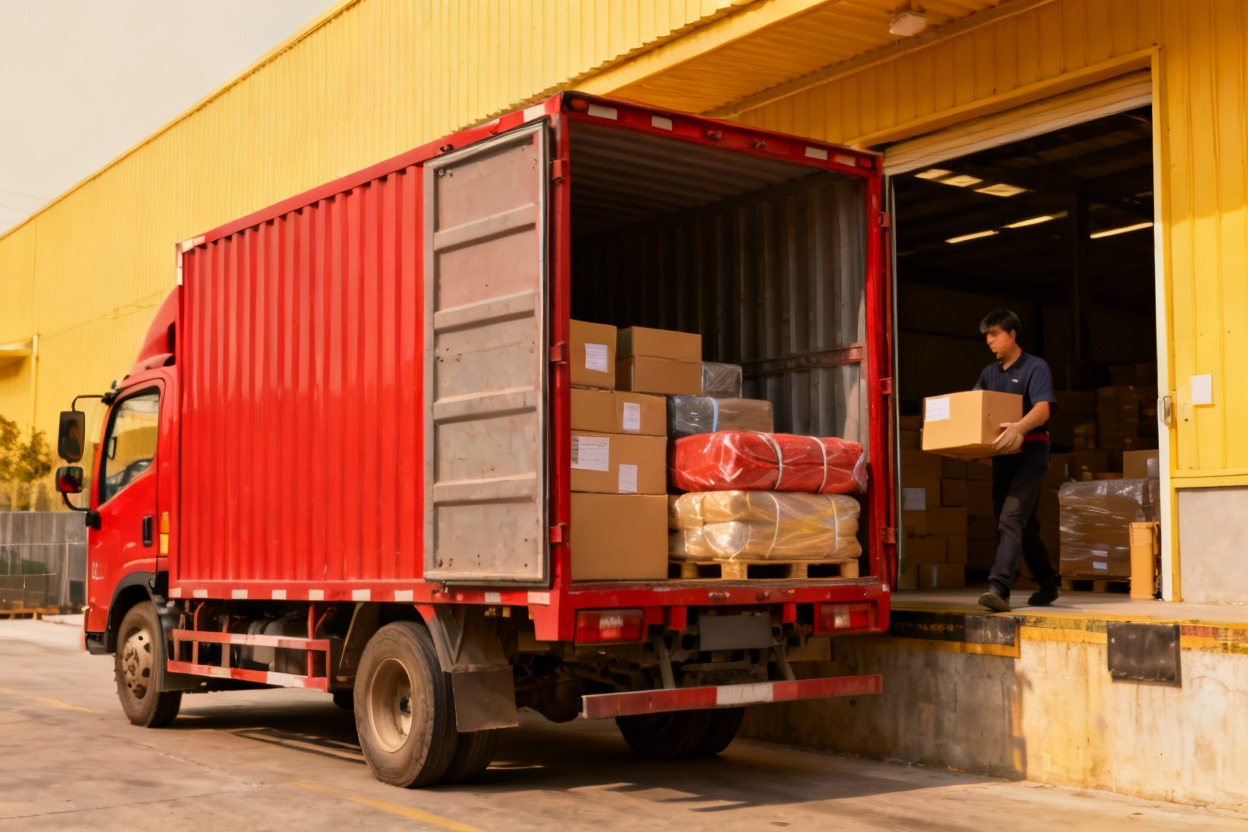
Daily operations include opening a daily round-trip trunk line between Kunming and Pu'er. Various end stations accept scattered goods from surrounding farmers and merchants, which are then consolidated at the central warehouse for sorting and distribution, realizing a standardized
logistics distribution
process. Simultaneously, the company operates the Yunnan Logistics Network online information platform, allowing for online order registration and transportation progress tracking. Offline stations complete physical handovers, creating a coordinated online-offline system.
III. Positive Value of Multi-Station Logistics to Regional Industries
- Reducing circulation costs for farmers: Delivery and pickup of goods at nearby townships eliminates the need to drive to the Simao urban area;
- Stabilizing replenishment timeliness for merchants: Fixed trunk lines with daily departures make the turnover cycle for goods from Kunming controllable;
- Reducing cargo loss: Standardized warehousing and category-based stacking alleviate damage issues during long-distance transit in mountainous areas;
- Simplifying docking processes: A single service provider covers two-way transport across multiple districts and counties in Kunming and Pu'er, so merchants do not need to coordinate with multiple scattered trucks.
IV. Future Development Direction of Pu'er Logistics Industry
In the future, the scale of rural e-commerce and sales of specialty agricultural products will continue to expand, and market demand for
logistics distribution
service providers with complete stations, stable trunk lines, and online information facilities will further increase. Local specialized logistics will continue to optimize end coverage in townships and improve specialized protective facilities for tea and fresh products to fit the circulation needs of Pu'er's characteristic industries. Local merchants, cooperatives, and factories can rely on the mature multi-station
Pu'er logistics
dedicated lines to coordinate goods transport, adapting to long-term production and sales circulation plans.
